
What is Acupuncture Really Like?

If you’ve ever wondered what actually happens during an acupuncture session, or if you’ve been quietly thinking about booking but aren’t sure what to expect, I hope my experience helps.
I recently visited Louise Attwood, acupuncturist and Chinese herbal medicine practitioner at The Jade Centre in Chapel Allerton, and I was genuinely surprised, in the best possible way, by what unfolded.
I’ll be honest: I hadn’t gone in with a clear idea of what was wrong with me. For months I’d been dealing with a nagging, hard-to-describe pain at the very top of my legs, spreading into my hips.
Some days it felt muscular, other days like something deeper. Add in a foggy sense of exhaustion I couldn’t shake, and I finally admitted defeat and booked an appointment.
Arriving at The Jade Centre
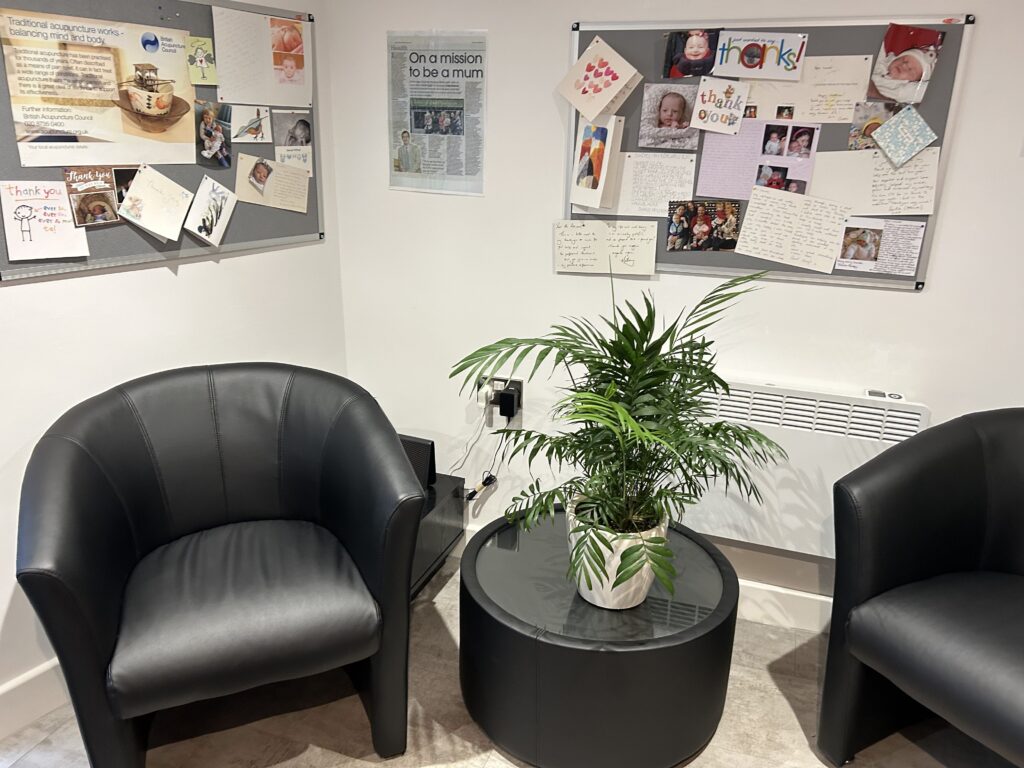
The clinic is tucked away on a quiet side street in Chapel Allerton , easy to find, well signposted, and instantly calming. You step through the door into a tidy, peaceful waiting room that seems to signal “you can breathe now.” Louise has clearly put a lot of thought into creating a space that helps people settle themselves before they’ve even begun treatment.
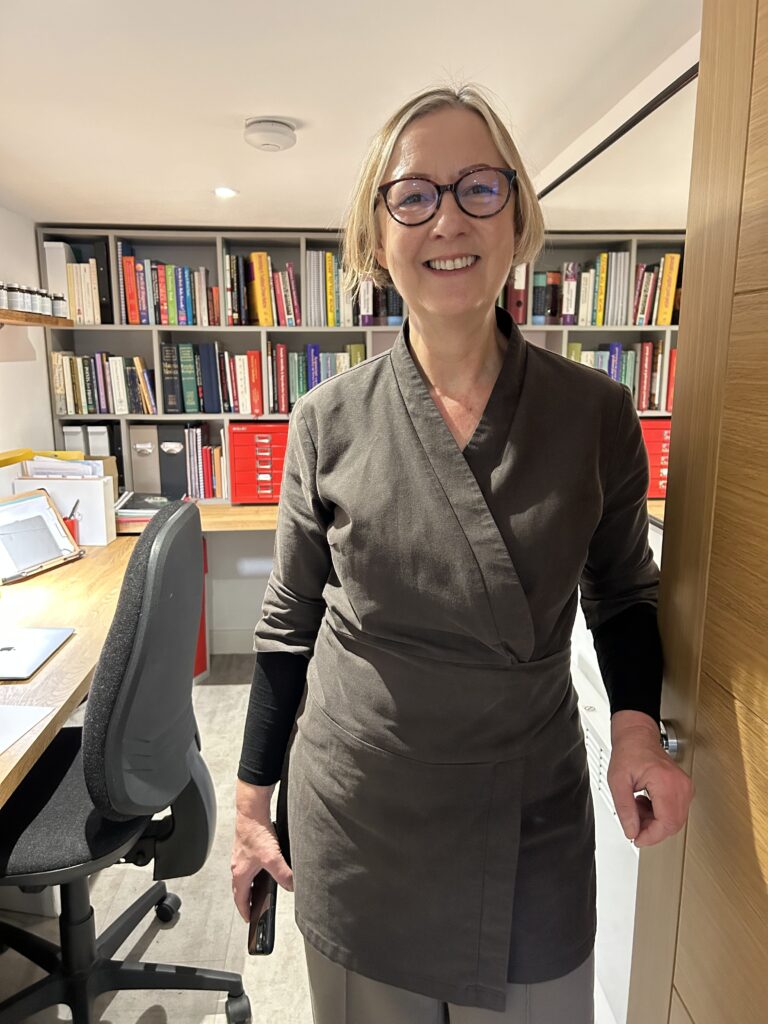
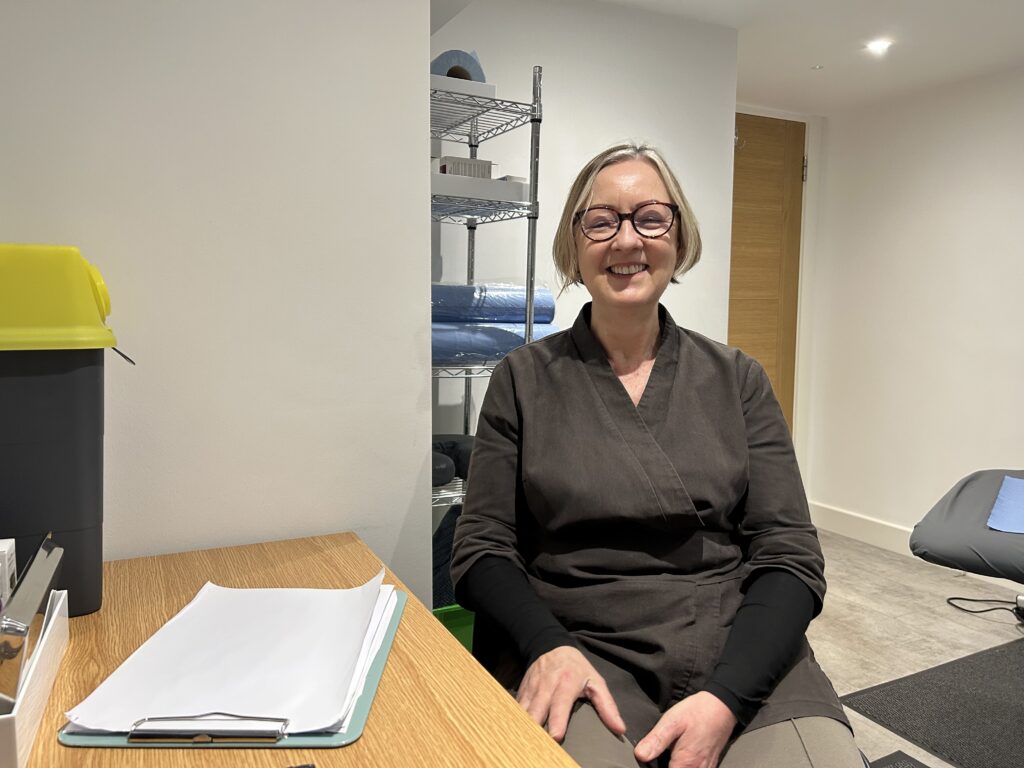
Louise greeted me warmly, and within five minutes it already felt like she had all the time in the world just to talk to me. No rushing, no clipboard-tapping, no “you’ve got ten minutes , go.” Just a gentle pace and a sense that this was my time and my space.
A Very Different Kind of Consultation
I expected to sit down and point to my legs and say, “It hurts somewhere round here.” But Louise’s consultation style is nothing like the quick symptom-focused questions you often get in a GP appointment. Instead, she asked about:
- how I’d been sleeping
- what my day-to-day stress levels were like
- how I felt in myself emotionally
- my digestion
- what my diet looked like
- whether anything had changed in my routine
- and so on
At first, I thought, “What do these things have to do with my legs?” But the more she asked, the more I realised how much of my tiredness, irritability and general ‘running on empty’ I’d been ignoring.
Louise explained that in Traditional Chinese Medicine (TCM), pain and exhaustion are often part of the same picture , signs of imbalance rather than isolated problems. It was the first time in months I’d actually stopped to think about how everything was connected.
The Examination: Surprisingly Precise
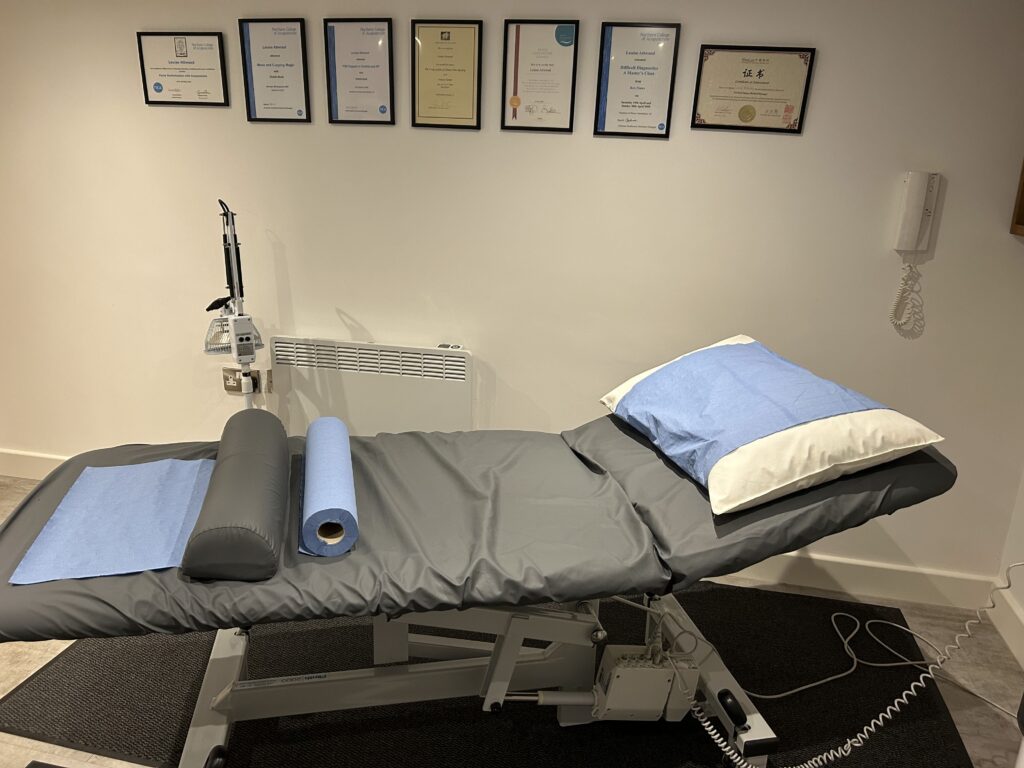
Next, she asked me to get comfortable on the treatment couch , which, thankfully, moves up and down, so if you’ve got mobility issues it’s perfectly manageable.
I’d been vague about where exactly my pain was (“Somewhere around here… I think”), but within minutes Louise had located specific tender spots , small, tight areas in the muscle that she could identify by feel alone. In her clinical notes, she later wrote that she found “several tight and tender points in the thigh muscles” that were likely causing the pain in my hips. That alone was impressive.
Then came something completely new to me: the pulse and tongue diagnosis. In TCM, the pulse is much more detailed than simply ‘strong’ or ‘weak’. Louise explained that there are many different pulse qualities , around 28, in fact, and mine was showing as thin and shaky, which in her words suggested my “inner battery was empty.”
That definitely felt accurate.
The Acupuncture Needles (Not What You Think)
If the thought of needles puts you off , trust me , these aren’t “needles” in the way you imagine. They’re incredibly fine, sterile, single-use, and honestly? You barely feel them.
Louise first placed needles in the tight muscle points in my legs. I didn’t feel pain , not even close , but I did feel an odd zingy sensation that travelled through the muscle, almost like something was releasing. It wasn’t uncomfortable, just unfamiliar. The moment it happened, I thought, “So that’s what muscle tension releasing feels like.”
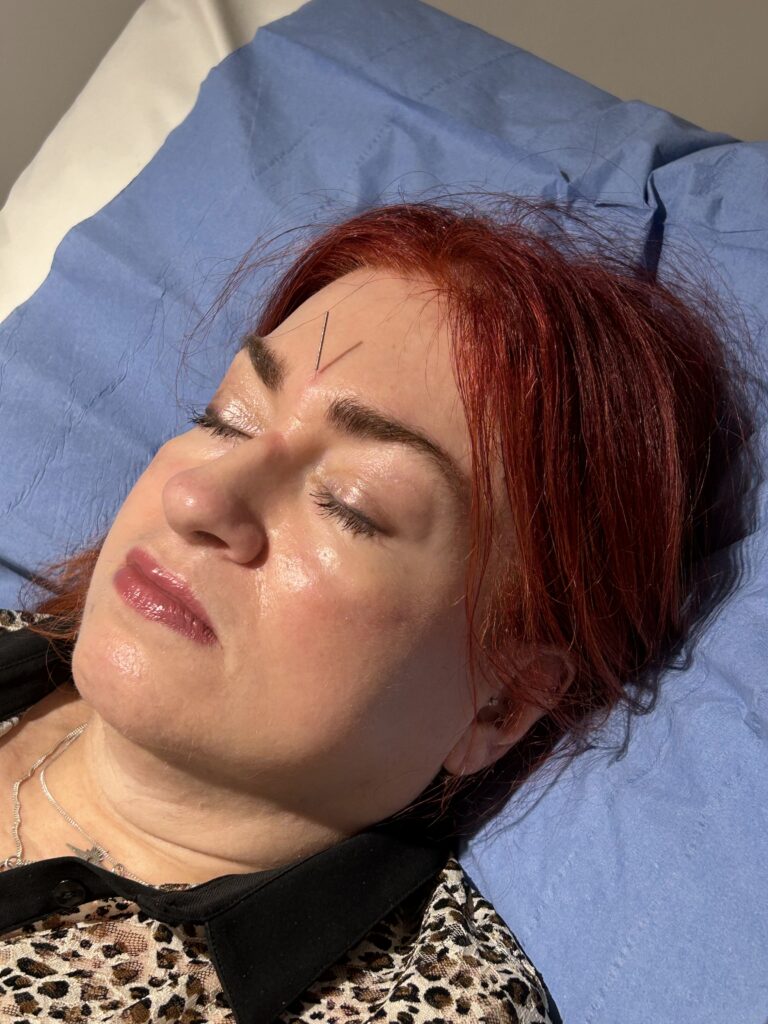
She repeated the process on both legs, then added points to help with my exhaustion: one of them right in the centre of my forehead. I couldn’t feel a thing.
The Best Bit: Deep Rest
Once the needles were in place, Louise dimmed the lights and told me to relax while the treatment did its work. The room was warm, calm and still , and within minutes my whole body started to soften.
I didn’t expect to drift into such a deep state of rest, but I did. It was the first time in weeks I’d felt my nervous system truly switch off.
After the session, I went home and , no exaggeration , slept for a few hours. Not because I was wiped out, but because my body finally got the chance to rest properly. And when I woke up?
I felt amazing. Clearer, lighter, calmer, and the nagging leg pain had eased significantly.
A Treatment Plan That Actually Makes Sense
Louise and I agreed that regular sessions would be the way forward , not just to keep the pain away but to rebuild the energy reserves I’d clearly run down. This fits exactly with how TCM works: you address the immediate problem, then support the whole system so it doesn’t creep back.
What I appreciated most was that nothing felt rushed or transactional. Louise genuinely cares and treats you as a whole person, not a set of symptoms.
Would I Recommend It? Absolutely
If you’re curious about acupuncture , whether it’s for chronic pain, stress, burnout, hormonal issues or something you “can’t quite put your finger on” , I can’t recommend Louise enough. Her clinic is warm and welcoming, and her approach is both deeply knowledgeable and incredibly compassionate.
Sometimes you don’t know how run down you are until someone helps you stop long enough to notice.
And that’s exactly what this session did for me.
What a First Acupuncture Treatment Is Really Like: A Practitioner’s Perspective from The Jade Centre
One of the questions I’m often asked is, “What actually happens during an acupuncture session?” Many people are curious but unsure, especially if they’ve never visited a Traditional Chinese Medicine (TCM) practitioner before. So I thought I’d share a recent treatment experience from my point of view , what I noticed, what I assessed, and how I approached helping a client in pain and feeling run down.
My hope is that this gives you a clearer picture of what you can expect when you come to see me at The Jade Centre in Chapel Allerton.
Welcoming a New Client
My clinic is tucked away on a quiet side street, which naturally helps create a sense of calm before clients even walk in. Once inside, the waiting room is warm, tidy and peaceful , and I always greet clients personally to help them feel relaxed and at ease.
When this client arrived, she mentioned she’d been struggling with pain at the tops of her legs, radiating into her hips. There was no clear cause, and she wasn’t sure whether it was muscular or something deeper. She also shared that she’d been feeling extremely tired for a long period of time.
For me, this is where the work really begins: listening.
Why I Ask About Much More Than the Pain
Traditional Chinese Medicine is holistic, which means I’m not just interested in where something hurts , I’m interested in why it hurts and what the wider picture looks like.
So before I examine any physical area, I ask a range of questions about:
- sleep
- energy levels
- digestion
- stress
- emotional wellbeing
- lifestyle
- diet
- any recent changes
These questions help me understand how the body is functioning as a whole. In this client’s case, her answers suggested that she’d been running on very low reserves for quite some time , something she later realised she hadn’t fully acknowledged herself.
Finding the Root of the Pain
When I began the physical examination, I suspected the problem might lie in the thigh muscles. She spends long periods sitting for work, which can create tension in the front of the thighs and into the hips.
Within a few minutes, I located several very tight, tender points in both legs. These “knots” or trigger points can create surprisingly intense pain, especially first thing in the morning.
My clinical notes read:
“Several tight and tender points in the thigh muscles. Used acupuncture techniques to encourage these tight areas to release. Several released their tension, which should allow the muscles to soften and return to normal.”
This is one of the satisfying parts of acupuncture , you can often feel the muscle soften and release under your fingertips after placing the needle.
Understanding Her Energy Levels
Next, I assessed her pulse, which in TCM offers a huge amount of information. There are many different pulse qualities , far more than in Western medicine , and her pulse felt thin and deficient.
In TCM, this often reflects deep fatigue, what I would describe as the body’s “inner battery” being drained. It fit perfectly with how she’d been feeling: overwhelmed, exhausted, and running on empty.
I then looked at her tongue, which gives additional insight into circulation, energy levels, digestion and internal balance.
These diagnostic tools help me decide which acupuncture points to use , not just for the pain, but to support her overall wellbeing.
Using Acupuncture to Release Pain and Boost Vitality
Acupuncture needles often worry people who haven’t experienced them, so I always reassure clients:
- they’re single-use
- sterile
- extremely fine
- and nothing like medical needles
This client was understandably unsure what to expect, but acupuncture shouldn’t be painful , and in her case it wasn’t.
When I placed needles into the tight muscle points, she felt a mild “zingy” sensation, which is very typical when a muscle releases tension. It’s not painful, just a sign that the point has responded.
I then added a series of points to address her exhaustion and to calm and strengthen her system. One was placed on her forehead , a point many people don’t even feel being inserted.
After the needles were in place, I dimmed the lights and left her to rest while the treatment took effect.
What Happened Afterwards
Planning Ongoing Support
Many people find acupuncture deeply relaxing, and this client was no exception. When she went home afterwards, the sense of calm took over so completely that she slept for several hours , something her body evidently needed.
She later told me she woke up feeling lighter, clearer, and with a noticeable improvement in her leg pain. That’s always wonderful to hear, and it’s often the case when both muscular tension and underlying fatigue are being addressed together.
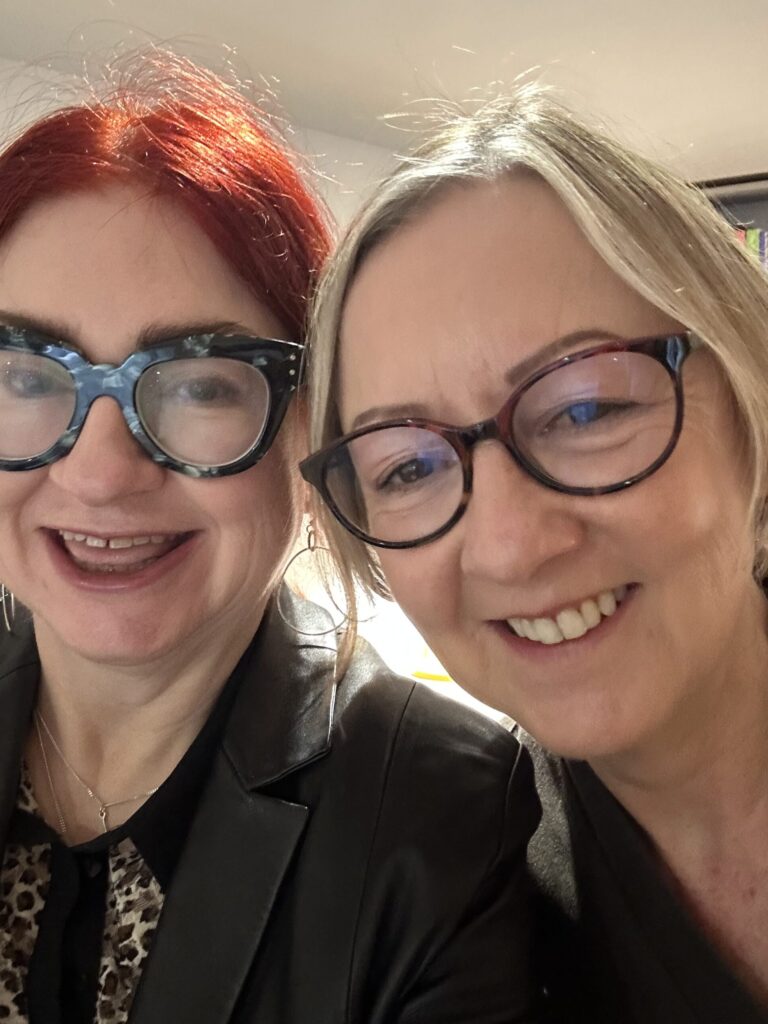
After her session, we agreed a plan for ongoing treatments. Chronic fatigue and long-standing muscle tension don’t appear overnight, and they’re best treated with consistent, gentle support.
Acupuncture works cumulatively , each session helps build resilience, energy and balance.
What to Expect From Your First Treatment
What will Acupuncture feel like?
Our patients regularly tell us they find the process energising or immensely relaxing – during treatment they often feel a sense of bliss and can even fall asleep due to the intense feelings of calm!
How Safe is it?
What about hygiene?
Your well-being and safety is our highest priority. Only disposable pre-sterilised single-use acupuncture needles are used in our clinic.
In addition, I follow my strict professional guidance regarding general clinic hygiene. and cleanliness.
How long will the treatment last and what will it cost?
The number of sessions needed varies hugely depending on you and your condition.
Acute conditions may only need a few sessions. For more long-standing chronic conditions you may need to have one or two weekly sessions for a few weeks, months or until your symptoms have subsided.
Many people choose to have regular sessions once every 4 to 6 weeks to maintain their good health and wellbeing, and we support this to help you to keep enjoying life to the full.
Frequently Asked Questions
Acupuncture is used to treat a wide range of conditions. It is particularly effective for the treatment of musculoskeletal conditions (bones and muscles) and pain conditions, including: dental pain, joint pain and postoperative pain.
Side effects are very rare, but may include some soreness and minor bleeding or bruising where the needles were inserted. Single-use, disposable needles are used at the Jade Centre so the risk of infection is minimal.
Acupuncture needles are not comparable to other needle as they are very thin. Most people feel no pain or very little pain when they are inserted. Often people say they feel energised or relaxed after receiving treatment.
.
You can see our prices here.
I’ll start by asking some questions about your health and any condition you may have.
Some of these questions rather different from the usual questions a doctor may ask, such as how much liquid you drink, what your tongue looks like, or what your eating habits are.
Your clear answers to these questions are important for me to be able to understand the way your body is functioning. We will then be able to put together your individual treatment plan.
Acupuncture is generally safe alongisde other treatments, but if you have a bleeding disorder, such as haemophilia, or are taking anticoagulants, talk to your GP before you have acupuncture.
Acupuncture is also not usually advised if you have a metal allergy or an infection in the area where needles may be inserted.
It’s also generally safe to have acupuncture when you’re pregnant. However, please let us know if you’re pregnant because certain acupuncture points cannot be used safely during pregnancy.
The number of sessions needed varies hugely depending on you and your condition.
Acute conditions may only need a few sessions. For more long-standing chronic conditions you may need to have one or two weekly sessions for a few weeks, months or until your symptoms have subsided.
Yes we do!